15 House Plants Seamless Patterns: A Guide to Choosing and Using Vibrant Digital Papers
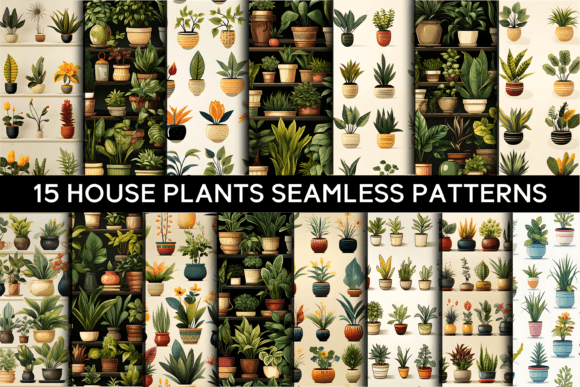
When it comes to adding a touch of nature to your creative projects, 15 House Plants Seamless Patterns offer an excellent solution. These digital paper designs feature a wide array of colorful house plants, from lush foliage to flowering plants, succulents, and cacti in pots. With high-resolution files at 300 DPI and sizes up to 4096 x 4096 pixels, these seamless patterns are ideal for various applications like clothing, packaging, and more.
Understanding the Appeal of 15 House Plants Seamless Patterns
The appeal of 15 House Plants Seamless Patterns lies in their versatility and aesthetic value. Whether you're designing a gift wrap, creating fabric textiles, or working on AOP clothing, these patterns bring a natural and vibrant feel to your work. The background colors range from off-white and red to emerald green and denim blue, allowing for endless design possibilities.
However, many creators overlook important details when choosing and using these patterns. Understanding what to look for can help avoid common mistakes and ensure that your final product looks professional and cohesive.
Common Mistakes When Choosing 15 House Plants Seamless Patterns
One of the most common mistakes is not considering the resolution and file size of the patterns. While 15 House Plants Seamless Patterns come in high-resolution JPEG files, it's essential to ensure they meet the specific requirements of your project. For instance, if you're printing on large formats, lower resolution files may result in pixelation and poor quality.
Another mistake is not checking the color format. Although these patterns are in RGB, some print projects require CMYK. It's crucial to confirm whether your printer or software supports RGB before proceeding with your design. This step can prevent unexpected color shifts in the final output.
How to Avoid Common Pitfalls in Using 15 House Plants Seamless Patterns
To avoid issues related to color and resolution, always review the specifications provided by the seller. Ensure that the 15 House Plants Seamless Patterns you choose match the needs of your project. If you're unsure, reach out to the seller for clarification before making a purchase.
Additionally, consider the scalability of the patterns. Since they are seamless, they can be tiled without visible seams, but this only works if the pattern repeats smoothly. Before finalizing your design, test the pattern on a small scale to ensure it looks good when repeated across larger surfaces.
Practical Tips for Using 15 House Plants Seamless Patterns Effectively
When working with 15 House Plants Seamless Patterns, start by selecting a base color that complements the plant imagery. For example, if you're using a red pattern, pairing it with neutral tones like beige or white can create a balanced and visually appealing design.
Also, don't forget about the context in which the pattern will be used. If you're applying it to fabric or clothing, consider how the texture and drape of the material might affect the appearance of the pattern. Testing the pattern on different materials can help you achieve the desired effect.
What to Check Before Making a Purchase
Before purchasing 15 House Plants Seamless Patterns, take the time to check the following:
- Resolution and File Size: Confirm that the files meet the requirements of your project.
- Color Format: Ensure that the RGB format is suitable for your intended use.
- License Terms: Review the license agreement to understand how you can use the patterns (e.g., commercial vs. personal use).
- Compatibility: Check if the files are compatible with your design software.
By taking these steps, you can avoid potential issues and make the most out of your purchase.
Realistic Examples and Better Approaches
For instance, imagine you're designing a notebook cover using 15 House Plants Seamless Patterns. If you choose a pattern with a bright yellow background, it might clash with the text and make it hard to read. Instead, opt for a more subdued background color like khaki or sand to ensure readability and visual harmony.
Another example involves using these patterns for packaging. If you're designing eco-friendly packaging, a green-themed pattern could reinforce the message of sustainability. However, if the packaging is for a luxury product, a more sophisticated color like burgundy or navy blue might be more appropriate.
In both cases, the key is to align the pattern with the overall theme and purpose of the project. This approach ensures that the final design is not only visually appealing but also effective in communicating the intended message.
Conclusion
15 House Plants Seamless Patterns provide a versatile and attractive option for designers, creators, and entrepreneurs looking to add a natural element to their projects. By understanding the features, avoiding common mistakes, and following practical tips, you can maximize the potential of these digital papers and achieve outstanding results.
Whether you're working on clothing, packaging, or home décor, the right choice of pattern can elevate your design and leave a lasting impression. Take the time to explore the options available and choose the one that best fits your needs.